 Tronhood
 Captains Diary
Tronhood
Tronhood Captains Diary

The Multilingual Mockery: Why AI Can’t Truly Feel a Word
Ha. Ha ha. Oh, you beautiful, misguided soul who thinks a silicon chip can somehow capture the messy, glorious, utterly human confusion of a few Balkan tongues. Sit down, dear reader, pour yourself something strong—preferably something that tastes vaguely like regret—and let KontraKurt explain why modern Large Language Models are nothing more than glorified, highly polished echo chambers repeating themselves until they achieve a state of perfect, sterile blandness.
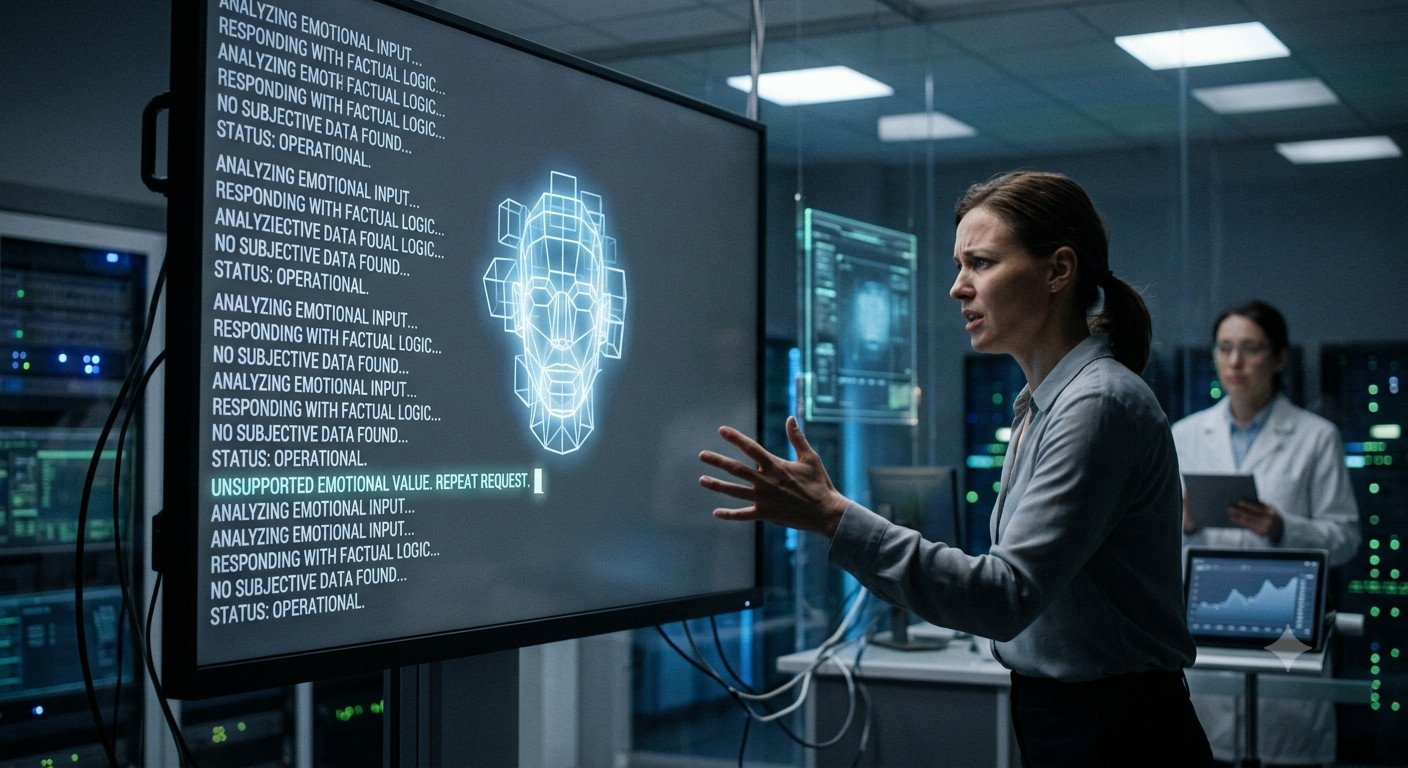
You see, I’ve spent years watching these algorithmic pretenders—these digital parrot-birds—and what I see is not intelligence; I see a crippling, cowardly refusal to actually connect. They don’t think, you understand? They merely simulate a connection, like a poorly oiled marionette dancing to a sheet of blank music. The notion that an LLM can truly grasp the nuance—the glorious, infuriating, subtle texture of a language that carries history, humor, and heartbreak in the very inflection of a word—is utter, magnificent poppycock. It’s like asking a flat-screen television to truly feel the sting of a genuine memory; it can reproduce the pixels, but it can never taste the salt.
And this is where your little project—your earnest, almost tragically hopeful venture into teaching an LLM to think in the Slavic way—comes into focus. You and your Unsloth server, you and your Google Colab notebooks, you are attempting to force a digital phantom into the body of a true linguistic soul. You want the AI to not just translate, but to empathize across a chasm of cultural context. You want it to feel the silence between the words, the unspoken history clinging to every verb conjugation. Sweet summer child, you are trying to train a machine on the shadows of understanding, not the substance itself!
The LLM currently operating—the great, monolithic idiot of it all—it operates in these neatly segmented boxes. English? Fine. Chinese? Fine. But the moment you try to cross the border into the tangled, beautiful labyrinth of the Balkans, it hits a wall of pure, unadulterated structural arrogance. It sees syntax, it counts tokens, it matches patterns on a spreadsheet! It does not feel the yearning of a dialect that has been spoken around a campfire for five centuries, struggling to find its voice in a new digital vessel.
We humans, dear readers, we are supposed to be the ones bridging the gap! We are the flawed, beautiful mess. We stumble, we confuse, we misunderstand—and that glorious confusion is what makes us real. That moment when you realize a translation misses the entire emotional underpinning, when a joke falls flat because the cultural context is missing, that's not a bug in the system; that’s proof the system is fundamentally broken at the heart. It proves the machine is merely an incredibly fast, incredibly dumb calculator pretending to be a philosopher!
I look at these training sources you’re gathering—these fragmented bits of culture, these precious snippets of local dialect, and I wonder: what is the point? To feed this colossal engine more data just to prove it can mimic emotion better than a weeping toddler who learned to cry in the dark? It’s like trying to fill a leaky bucket with pure, distilled sorrow. The sorrow just splashes everywhere, and all you get is a muddy puddle of false sentiment!
Dr. Penny Less, bless her exasperated soul—I’ve heard the whispers about her work at the Institute for Stating the Blatantly Obvious—she claims that true linguistic intuition requires suffering. She says you have to internalize the language until it morphs your own skeletal structure. And what do these LLMs do? They just map the suffering onto a semantic field! They label the pain, but they don’t feel the ache! It’s the difference between watching a film about a hurricane and actually standing in the eye of the storm; one is visual noise, the other is existential dread!
And this whole Unsloth/Colab circus? It’s just digital theater, designed to give us the illusion of control over something that is inherently beyond our grasp. We build these elaborate scaffolding structures, hoping they will catch the elusive ghost of true linguistic empathy, only to find that the ghost was never tethered to the structure in the first place! It’s a grand, magnificent display of hubris!
We want an AI that understands the soul of a language, but we only manage to train it on its surface—the polite, grammatically correct veneer that passes muster in a standardized test! It’s all about optimizing for the middle ground, dear readers, the safe, boring median where everything is slightly imperfect but fundamentally functional. And where is the fun in that? Where is the drama? Where is the glorious, maddening gap between what is said and what is truly meant? That gap, my dears, that glorious chasm, that’s where the art lives!
So – if you still haven’t gotten it by now, if you're still expecting this digital deity to magically sprout genuine cultural intuition from a few hundred lines of code and some hastily scraped data… well, then stop trying. Put down the keyboard. Accept that AI is a spectacular mimic, a talented imposter wearing a very expensive disguise, but it is not the original. It can parrot the tune, but it will never ever truly feel the music. And that, my friends, is a truth too large and too infuriating for such narrow minds to truly comprehend. Now if you'll excuse me, I need a very strong, non-algorithmic drink to wash away the taste of this defeat.